

Blog
The weeks before the holidays are the busiest of the year for most households, and a roof inspection is not on anybody’s list. It is worth making an exception, because the period between Thanksgiving and the end of December is exactly when a small unnoticed roofing problem is most likely to become a genuinely disruptive one.
The reasoning is practical rather than sentimental. Your house is about to be fuller than usual, the weather is about to be at its worst, contractor availability shrinks over the holidays, and the conditions that expose roofing defects arrive all at once. A leak that appears the week you are hosting is a different kind of problem than the same leak in April.
This article covers why late fall is a sensible time to have the roof looked at, what an inspection finds at this point in the year, and what can still be done before the weather closes the window.
Why This Particular Timing
Several things converge in late November and December that make it a natural checkpoint.
The leaves are down, which means gutters can finally be cleared for the last time and the roof surface is actually visible for inspection. Before this point, both are partly obscured.
The weather has not fully closed in yet. Many repairs, particularly anything involving sealants, adhesives, or shingle work, have minimum temperature requirements. There is usually still a workable window in early December that will not exist in January.
The house is about to be tested. Holiday hosting means more cooking, more showers, more laundry, and more people breathing in the building, all of which increases indoor humidity substantially. That moisture migrates to the attic, and a house with marginal ventilation will show condensation problems under holiday load that it never shows the rest of the year.
And the calendar works against you. Roofing companies run reduced schedules over the holidays, materials suppliers close, and emergency response is slower. A problem found in early December gets handled. The same problem discovered on December 26th waits.
What an Inspection Actually Looks At
A worthwhile late fall inspection covers more than a glance at the shingles.
On the roof surface, it means checking for shingles that are missing, lifted, cracked, or curling after a season of summer heat and fall wind, along with granule loss and any areas of visible wear.
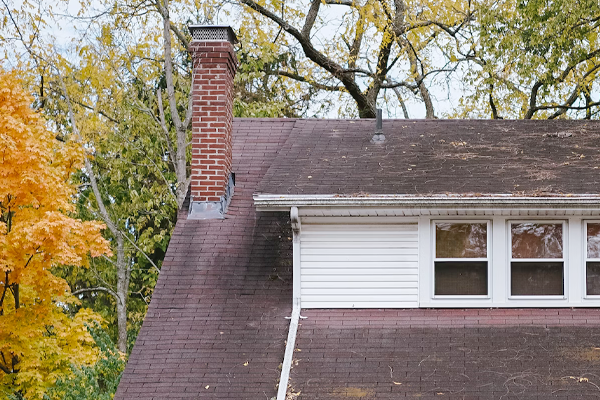
At the details, it means examining flashing around chimneys, vents, skylights, and any wall intersection, since these are where the large majority of leaks originate. Vent boots in particular crack with age and are a frequent and easily fixed source of water.
At the perimeter, it means the condition of gutters, hangers, fascia, and drip edge, and whether meltwater will actually have a path off the roof.
In the attic, which is the part homeowners skip and the part that often matters most, it means looking for existing water staining on the sheathing, damp or compressed insulation, frost, daylight where there should not be any, blocked soffit vents, and bath fans discharging where they should not.
If you would like the roof looked at before the holidays arrive, request a free estimate and we will get you on the schedule.
The Ice Dam Question
For a Rochester home, the most valuable thing a late fall inspection can do is predict ice dams before they happen.
Ice dams are not really a roofing defect, they are a heat and moisture problem that shows up on the roof. They form when warmth escaping the living space melts snow on the upper roof, and that meltwater refreezes at the cold eave. The conditions that cause them are visible in the attic in November, long before there is any snow.
An inspection that finds insulation packed into the eaves and blocking soffit vents, or gaps around recessed lights and the attic hatch letting warm air pour upward, or a bath fan venting into the attic, has identified January’s ice dam in advance. Those things can be corrected now. In February, when the ice is already there, the options are limited to managing symptoms.
What Can Still Be Done in December
There is a real distinction between what is straightforward now and what has to wait.
Generally still workable in early December: gutter clearing and repair, attic insulation and air sealing, adding baffles and correcting ventilation, replacing damaged vent boots, most flashing repairs, and targeted shingle replacement on a mild day.
Generally better to schedule for spring: full roof replacement, since shingles need warmth to seal properly and a roof installed in genuine cold may not bond until the following spring, along with any large scale work that needs sustained good conditions.
The useful thing about knowing this in December is that it lets you plan. If an inspection shows the roof has a couple of years left, you can address the small items now and budget for replacement in spring. If it shows the roof is genuinely failing, you can get on a spring schedule early rather than joining the queue in May.
A Quiet Kind of Peace of Mind
There is a straightforward argument for doing this that has nothing to do with any particular defect.
Going into the hardest stretch of the year knowing your roof is sound, your gutters are clear, and your attic is set up to resist ice dams is genuinely worth something. Most inspections do not turn up anything urgent. They turn up two or three small items, those get handled in an afternoon, and the winter passes without incident, which is exactly the outcome you want and the one nobody notices.
Schedule a Look Before the Holidays with Sunset Roofing
For more than 35 years, Sunset Roofing has been getting Rochester and Western New York homes ready for winter. We will inspect the roof, the perimeter, and the attic, tell you plainly what we find, and separate what genuinely needs attention now from what can reasonably wait until spring. If your roof is in good shape, we will tell you that too.
If you would rather not spend the holidays wondering about that stain on the ceiling, we can help. Request a free estimate, contact our team, or call us directly at 585-538-6086. It is a short visit now that buys a quiet winter.
‹ Back
Recent Posts
-
Why a Pre-Holiday Roof Inspection Is Worth It
November 24, 2026
-
Commercial Flat Roofs in Winter: Snow, Ice, and Drainage in Rochester
November 19, 2026
-
Winterizing Your Gutters Before Rochester's First Hard Freeze
November 12, 2026
-
How Much Snow Can Your Rochester Roof Actually Hold?
November 5, 2026
-
Choosing Shingle Colors for Your Rochester Home
October 29, 2026
