
Blog
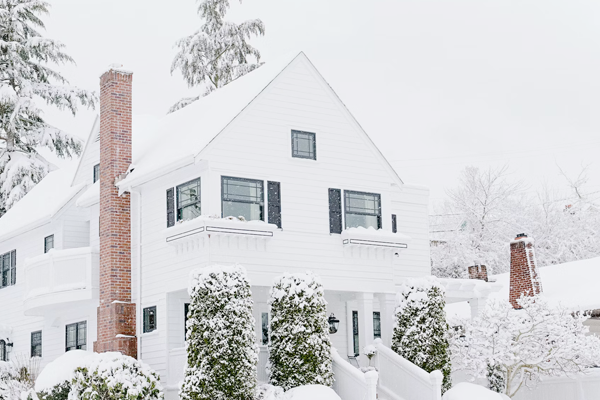
Every few winters Rochester gets the kind of storm that has people standing in their driveways looking up at the roof and doing arithmetic. Two feet of snow up there, a long stretch of cold with no melting, and then rain in the forecast. The question that follows is a fair one: how much can the roof actually take?
The reassuring answer is that a properly built roof in Western New York is designed for our winters and is very unlikely to fail. The more useful answer is that snow load depends far more on what kind of snow it is than on how deep it looks, and there are specific conditions worth paying attention to along with specific warning signs that should be taken seriously.
This article explains how roof snow load actually works, what raises the risk, and what to watch for.
Depth Is the Wrong Measurement
The single most important thing to understand is that snow depth tells you very little. Weight is what matters, and the same depth of snow can vary in weight by a factor of five or more.
Fresh, dry, powdery snow is mostly air and is remarkably light. A foot of it might weigh only a few pounds per square foot. Wet, heavy snow of the kind that falls near freezing is dense and can weigh several times as much at the same depth. Old snow that has sat and compacted is heavier still, and ice is heavier than any of it.
This is why a roof can carry three feet of January powder without any concern and be genuinely stressed by ten inches of March slush. When people report a roof failing under snow, it is almost always a wet, dense event or a long accumulation that never got a chance to melt off.
The Conditions That Actually Raise Risk
Structural problems from snow are rare, and when they happen it is usually a combination of factors rather than depth alone.
Rain on top of snow. This is the classic dangerous scenario in our region. An existing snowpack acts like a sponge, absorbing rainfall and holding it rather than shedding it. The load can increase dramatically in a matter of hours, and it is the single most common trigger for winter structural problems.
Drifting and unbalanced loading. Wind does not deposit snow evenly. It scours one slope and piles it deep on the other, and it builds drifts against anything vertical. The result is a load concentrated on one part of a structure rather than spread across it, which is harder on the framing than a uniform layer.
Ice damming. Ice at the eaves concentrates significant weight at the roof edge, which is also where the structure has the least support and where water is being held rather than drained.
Repeated accumulation with no melt. A Rochester winter can string together weeks below freezing, so each storm adds to the last without anything leaving. It is cumulative load that gets roofs into trouble, not any single storm.
Low slope and flat roofs. Steep roofs shed. Flat and low slope roofs hold everything that lands on them, which is why commercial buildings and porch or addition roofs deserve more attention than the main slopes of a house.
Warning Signs Worth Taking Seriously
Structures usually give notice before they fail, and the signs are recognizable if you know them.
Inside the house, listen for new creaking, popping, or cracking sounds coming from the roof or attic under load. Look for doors or windows on the upper floor that suddenly stick or will not latch, which can indicate frame deflection. Watch for new cracks in drywall or plaster, particularly above door frames and at wall and ceiling joints, and for any visible sagging or bowing of a ceiling.
In the attic, look for rafters or trusses that appear bowed, any cracked or splitting framing members, and any visible separation at connections.
From outside, look for a roofline that has developed a dip or sag, and for doors that no longer close properly.
If you see several of these together during a heavy load, treat it seriously. Get people out of the space beneath, and call for a professional assessment.
If you have concerns about your roof under load or want it evaluated before winter, contact our team and we will take a look.
The Real Risk Is Water, Not Collapse
It is worth putting the danger in proportion. Structural collapse from snow on a sound Rochester house is genuinely rare. Water damage from that same snow is extremely common.
The practical hazard for most homeowners is not the roof coming down, it is meltwater backing up under shingles behind an ice dam and running into the ceilings and walls. That happens every single winter across our region, and it does thousands of dollars of damage without ever threatening the structure.
This means the most valuable winter protection is not worrying about load. It is attic insulation, air sealing, and ventilation that keep the roof deck cold and prevent ice dams from forming, along with ice and water shield at the eaves that protects the deck if they do.
When Snow Should Come Off
Most roofs do not need to be cleared, and clearing one badly causes more damage than the snow would have.
Removal is worth considering when a very heavy wet snow is followed by rain in the forecast, when a low slope or flat roof has accumulated substantially, when there is obvious deep drifting on one section, or when the building is older, has a known structural issue, or has shown any of the warning signs above.
If snow does need to come off, a roof rake used from the ground is the right tool for a house, and it is generally enough to clear the lower few feet at the eaves to give meltwater a path off the roof. Do not climb onto a snow covered roof, do not use a shovel or anything metal against the shingles, and do not try to chip ice off with tools, all of which damage the roof surface and are dangerous besides.
Winter Roof Confidence from Sunset Roofing
For more than 35 years, Sunset Roofing has watched Rochester and Western New York roofs come through winters, and we can tell you what actually deserves attention on yours. That usually means making sure the attic is insulated, sealed, and ventilated well enough to prevent ice dams, and confirming the roof assembly has the protection it needs at the eaves.
If your roof concerns you when the snow piles up, or you want it assessed before winter arrives in earnest, we are glad to help. Request a free estimate, contact our team, or call us directly at 585-538-6086. Most Rochester roofs handle our winters fine. Knowing that with confidence is worth a great deal in February.
‹ Back
Recent Posts
-
How Much Snow Can Your Rochester Roof Actually Hold?
November 5, 2026
-
Choosing Shingle Colors for Your Rochester Home
October 29, 2026
-
-
-