
Blog
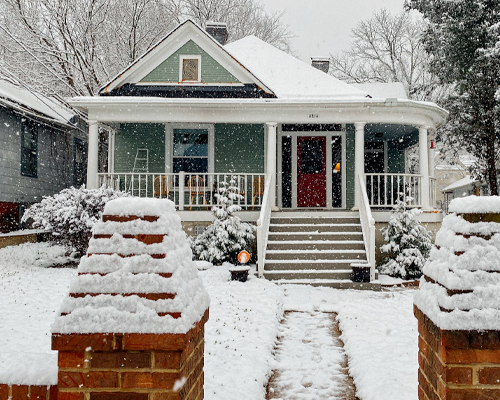
Anyone who has parked under the wrong edge of a roof during a Rochester thaw has learned what a roof avalanche is. Snow that has been sitting quietly for a week lets go all at once, and several hundred pounds of it comes off the eave in a single sliding sheet. It is startling, it is dangerous, and it is entirely predictable if you know which roofs do it.
Snow guards are the standard solution. They are small devices installed on the roof surface that hold accumulated snow in place, letting it melt and shed gradually instead of releasing in one mass. They are common on some roofs and unnecessary on others, and the difference is worth understanding before you spend money on them.
This article explains what snow guards do, which Rochester roofs actually need them, and what a proper installation involves.
What Snow Guards Do
A snow guard does not stop snow from leaving the roof. It changes how the snow leaves.
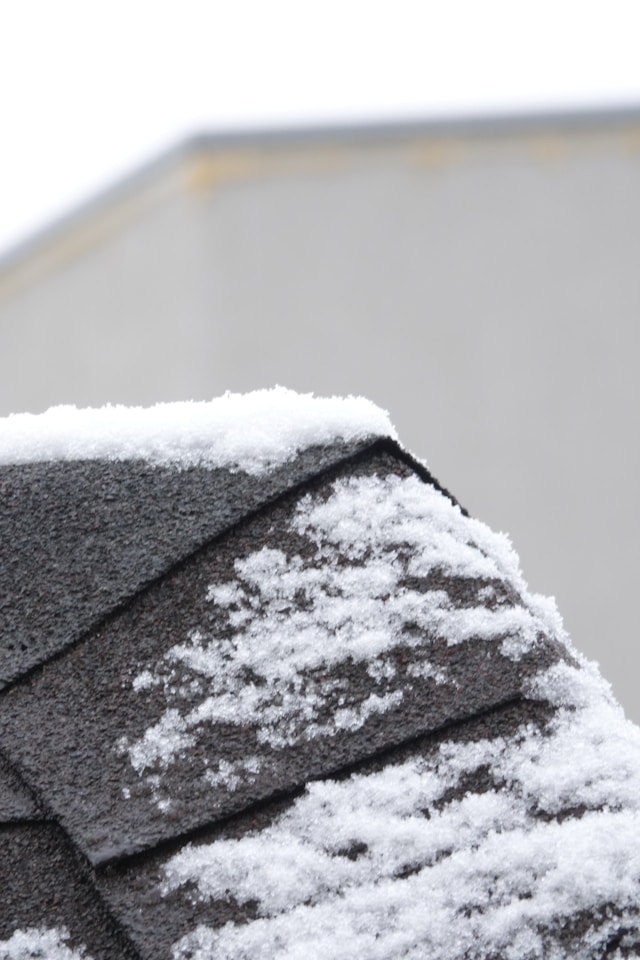
Without them, snow on a slick roof surface builds up until the layer against the roof warms slightly and loses its grip, at which point the entire mass slides at once. With snow guards installed in a proper pattern, the snowpack is broken into sections and held mechanically in place. It still melts and drains, and it still eventually clears, but it does so gradually and in manageable amounts rather than as a single release.
The goal is control. The snow is going to leave one way or another, and snow guards determine whether that happens over several days or in one second.
Which Roofs Actually Need Them
This is where a lot of money gets wasted, because snow guards are not a general roofing upgrade. They solve a specific problem on specific roofs.
Metal roofs are the primary candidate. Standing seam and other metal roofing is smooth and sheds snow readily, which is usually an advantage and occasionally a hazard. Nearly every metal roof over an area where people walk should have snow retention.
Steeper slopes shed harder. The steeper the pitch, the more readily accumulated snow releases and the further it travels when it does.
Asphalt shingle roofs usually do not need them. The granular surface of an asphalt shingle grips snow reasonably well, and most Rochester homes with shingle roofs shed snow gradually on their own. There are exceptions on steep sections above a critical area, but a standard shingle roof is generally not a candidate.
The real question is not what the roof is made of but what is underneath the eave. Snow guards are worth installing above entry doors and walkways, over driveways and parking areas, above decks, patios, and stairs, over gas meters and outdoor HVAC equipment, above landscaping you care about, and along any edge that discharges onto a neighboring property. If there is nothing below but lawn, there is usually nothing to protect.
The Gutter Problem
There is a second reason snow retention comes up in our area, and it has nothing to do with safety.
A sliding snow mass takes gutters with it. The entire weight of the snowpack moves down the slope and catches the gutter on the way past, bending it, tearing hangers out of the fascia, and sometimes ripping the whole run off the house. Homeowners who replace gutters every few winters for no apparent reason are often dealing with a sliding snow problem rather than a gutter quality problem.
Snow guards installed above the eave keep that load on the roof where the structure is designed to carry it, instead of letting it transfer to a gutter that is not.
If snow slides off your roof in sheets or your gutters keep getting damaged in winter, it is worth an evaluation. Request a free estimate and we will tell you whether snow retention makes sense for your roof.
Types of Snow Guards
There are two broad approaches, and the right one depends on the roof and how much snow needs holding.
Individual pad style guards are small brackets installed in a staggered grid across the roof surface. They are the more common choice on shingle roofs and on smaller areas, they are less visually prominent, and they distribute the holding force across many points.
Continuous bar or rail systems use brackets that carry a horizontal bar or pipe running across the roof. They hold considerably more load, they are the usual choice on metal roofing and on wide expanses above critical areas, and they present a clean horizontal line rather than a scattered pattern.
Both are available in finishes that blend with the roof, and on metal roofs there are clamp-on versions that attach to the seam without any penetration at all.
Why Installation Is the Whole Game
Snow guards are simple devices that fail badly when installed carelessly, and there are two ways that happens.
The first is inadequate attachment. A snow guard is holding back real weight, and it has to be fastened into something structural with the correct fasteners and properly sealed. A guard that is surface mounted into nothing more than the shingle will pull out under load, taking a chunk of roofing with it and creating a leak in the process.
The second is an incorrect layout. The number of guards and their spacing depend on the roof pitch, the length of the slope, and the expected snow load. Too few, poorly placed, and they simply fail together in a row. This is an engineering calculation, not a matter of spacing them out evenly and hoping.
Anything installed on a roof is a potential leak point, which is why snow guards should be installed by a roofer who will flash and seal every penetration correctly. The ideal time to do it is during a roof replacement, when the layout can be planned and the attachments integrated into the assembly from the start.
Talk to Sunset Roofing About Snow Retention
For more than 35 years, Sunset Roofing has worked on roofs through Rochester and Western New York winters, and we will give you a straight answer about whether snow guards are worth it on your home. On many shingle roofs they are not, and we will say so. Where there is a real hazard below the eave or a recurring gutter problem, they are an inexpensive fix for something that could otherwise injure someone.
If snow comes off your roof in sheets, or you are planning a roof replacement and want to address it while the roof is open, we can help. Request a free estimate, contact our team, or call us directly at 585-538-6086. It is a small detail that matters a great deal on the one day it matters at all.
‹ Back
Recent Posts
-
-
-
What to Do When Your Roof Starts Leaking During a Storm
October 8, 2026
-
-