

Blog
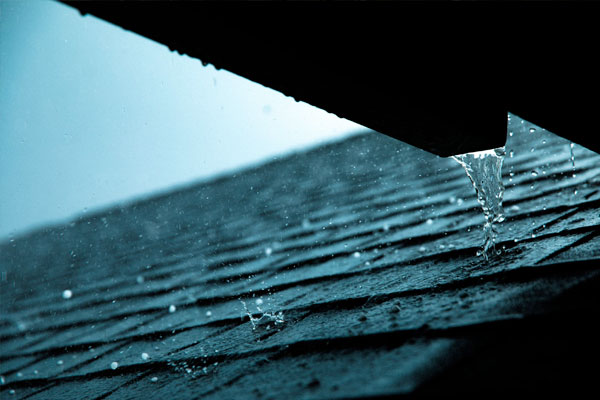
There is a particular kind of dread that comes with hearing water drip inside your house while a storm is still going on outside. The roof is leaking, it is dark, it is raining hard, and the instinct is to do something immediately. Knowing what that something should be, and what it definitely should not be, makes a real difference in how much damage you end up with.
An active leak during a storm is one of the few roofing situations where the homeowner’s response in the first hour genuinely changes the outcome. The roof itself cannot be fixed until the weather clears, but the water already coming in can be controlled, and the damage it does to ceilings, insulation, and belongings is largely preventable.
This article walks through what to do when a leak starts during a storm, what to avoid, and what happens afterward when the roof can actually be repaired.
Start Inside, Not Outside
The single most useful thing to understand is that during an active storm, all of the productive work happens indoors.
Move belongings, furniture, and electronics out of the affected area first, then put down a bucket or bin to catch the water and towels or a tarp to protect the floor around it. Water travels, so check the surrounding area rather than just the obvious drip.
Be careful about electricity. If water is anywhere near a light fixture, ceiling fan, outlet, or electrical panel, do not touch it, and shut off power to that area at the breaker if you can do so safely. Water in a fixture box is a genuine shock and fire hazard, and it is one of the more common ways a roof leak becomes something worse.
Relieve a Bulging Ceiling
This is the step that feels wrong and is usually right.
If you see a ceiling sagging, bulging, or discolored in a growing circle, there is water pooling above the drywall. Left alone, that pocket grows until the drywall gives way all at once, bringing down a large section of ceiling along with soaked insulation and everything it has collected.
Put a bucket underneath and pierce the center of the bulge with a small screwdriver or nail to let the water drain in a controlled stream. Deliberately making a small hole in your own ceiling is counterintuitive, but it turns a ceiling collapse into a patchable hole and dramatically reduces the mess and the repair cost.
Do Not Go on the Roof
Every year people are seriously injured trying to tarp a roof in the middle of a storm, and it is almost never worth it.
A wet roof is extremely slippery, and a wet roof in wind is worse. In a thunderstorm there is also a lightning risk, and at night you are working blind on a surface that may already be structurally compromised. A tarp installed badly in poor conditions often does nothing anyway, because it needs to be secured above the leak and lapped correctly to shed water.
The water coming through your ceiling tonight is a drywall repair. A fall from a wet roof is a different category of problem entirely. Manage it from inside and let the roof wait until conditions are safe.
If you have an active leak and want it looked at as soon as the weather allows, contact our team and we will get you scheduled.
Document Everything While It Is Happening
Photographs taken during the event are far more useful than photographs taken after things dry out.
Take pictures and short videos of the active drip, the stained or bulging ceiling, and any damaged belongings, and note the time. If you can safely see anything from a window or the ground that indicates where the water is entering, photograph that too. Keep receipts for anything you buy to manage the situation, including tarps, buckets, and fans.
If the leak turns out to result from sudden storm damage rather than gradual wear, this documentation supports an insurance claim. Insurers generally cover sudden damage and generally do not cover long-term neglect, so evidence of what happened and when is worth having.
Why the Leak Is Rarely Where You Think
One of the most common frustrations after a storm leak is discovering that the damage inside is nowhere near the problem outside.
Water entering a roof lands on the deck and then follows the path of least resistance. It runs along the top of the sheathing, down a rafter, across a ceiling joist, and emerges through a light fixture or a seam in the drywall many feet from where it came in. A stain in the middle of a bedroom ceiling can easily originate from failed flashing at a chimney on the other side of the attic.
This is why chasing the stain is a poor way to find a leak, and why a proper diagnosis involves getting into the attic and tracing the water back to its actual entry point. Common sources include failed flashing around chimneys, vents, and skylights, cracked vent boots, lifted or missing shingles from wind, ice dam backup in winter, and clogged gutters causing overflow at the eaves.
What Happens After the Storm
Once conditions are safe, the sequence is straightforward.
The roof gets inspected properly, including the attic side, to identify the true entry point rather than the visible symptom. If the roof cannot be permanently repaired right away, it gets a properly installed temporary cover to keep it dry in the meantime. Then the actual repair addresses the cause, whether that is flashing, a vent boot, damaged shingles, or something structural.
Do not skip the drying step. Wet insulation loses most of its R value and does not recover, and saturated framing and decking left closed up will grow mold within days. Anything soaked needs to come out and the cavity needs to dry before it is closed back up.
Emergency Roof Repair from Sunset Roofing
For more than 35 years, Sunset Roofing has handled storm leaks and emergency repairs for homeowners across Rochester and Western New York. We find the actual source rather than patching the stain, we get the roof dried in quickly when a permanent repair has to wait, and we document what we find so you have what you need for an insurance claim.
If your roof is leaking, do not wait for it to happen again. Request a free estimate, contact our team, or call us directly at 585-538-6086. Tonight it is a bucket. Handled properly, that is all it ever has to be.
‹ Back
Recent Posts
-
What to Do When Your Roof Starts Leaking During a Storm
October 8, 2026
-
-
-
-

Why Fall Is the Best Season for a Roof Replacement in Rochester
September 17, 2026
