

Blog
When most homeowners picture a new roof, they picture shingles: the color, the style, the visible surface that defines the look of the home. What they rarely picture is the layer underneath, the roof decking, also called sheathing, the structural wood surface that everything else is fastened to. Yet the condition of that decking is fundamental to the integrity of the entire roof, and it is one of the more common sources of unexpected cost and complication during a re-roofing project in Rochester.
The reason decking comes as a surprise is that you cannot see it until the old shingles come off. A roof can look perfectly fine from the outside while the decking beneath it has been quietly compromised by years of moisture, leaving it soft, delaminated, or rotted in places. Understanding what the decking is, how it deteriorates in our climate, and why a reputable contractor inspects and addresses it during a re-roof helps homeowners approach a roofing project with realistic expectations and the right questions.
This article explains the role of roof decking, the causes of decking deterioration in Western New York, and what proper handling of it looks like during a re-roof.
What Roof Decking Is and Why It Matters
The roof decking is the layer of structural sheathing, typically plywood or oriented strand board, and in older homes sometimes solid wood planks, that is fastened across the roof rafters or trusses. It forms the continuous surface that the underlayment and shingles are installed over, and it is what gives the roof its structural plane.
Everything above the decking depends on it. Shingles and underlayment are nailed into it, so it must be sound enough to hold fasteners securely. It bears the snow load of a Rochester winter and the weight of anyone walking the roof. And it is the substrate that keeps the whole roof assembly rigid and flat. Decking that has softened or rotted cannot hold nails reliably, cannot bear load safely, and cannot provide the flat, sound surface a quality roof installation requires. Installing new shingles over compromised decking is building on a weak foundation, and the new roof will not perform or last as it should.
How Decking Deteriorates in Rochester
Roof decking is wood, and wood deteriorates when it stays wet. Our climate provides several reliable ways for that to happen over the decades.
Slow leaks. A small roof leak that goes undetected, whether from failed flashing, a cracked vent boot, or aging shingles, does not always announce itself inside the home. Often the water is absorbed by the decking first, quietly rotting it from above long before a stain appears on a ceiling. By the time the leak is obvious, the decking around it may be significantly compromised.
Poor attic ventilation. An under-ventilated attic traps warm, moist air against the underside of the decking. Over years, that chronic moisture exposure degrades the wood from below, even in the absence of any roof leak. This is one of the most common and most overlooked causes of decking deterioration in our region.
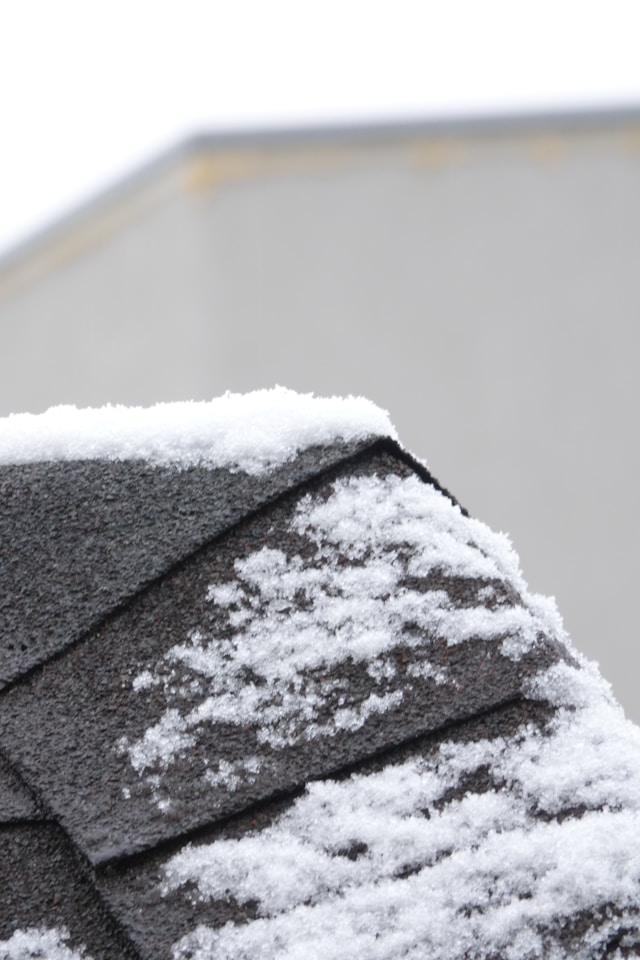
Ice dams. Rochester’s signature winter problem forces water back under the shingles and onto the decking at the eaves, repeatedly over many winters. That cyclical wetting is hard on the wood and a frequent cause of rot along the lower edges of the roof.
Age and repeated wetting. Decades of minor moisture exposure, condensation, and the freeze-thaw cycle gradually break down the wood, particularly at the vulnerable edges, valleys, and penetrations.
If you are planning a re-roof, knowing the likely condition of your decking ahead of time helps you budget realistically. Request a free estimate and we will discuss what to expect for your home.
Why Decking Is Inspected and Replaced During a Re-Roof
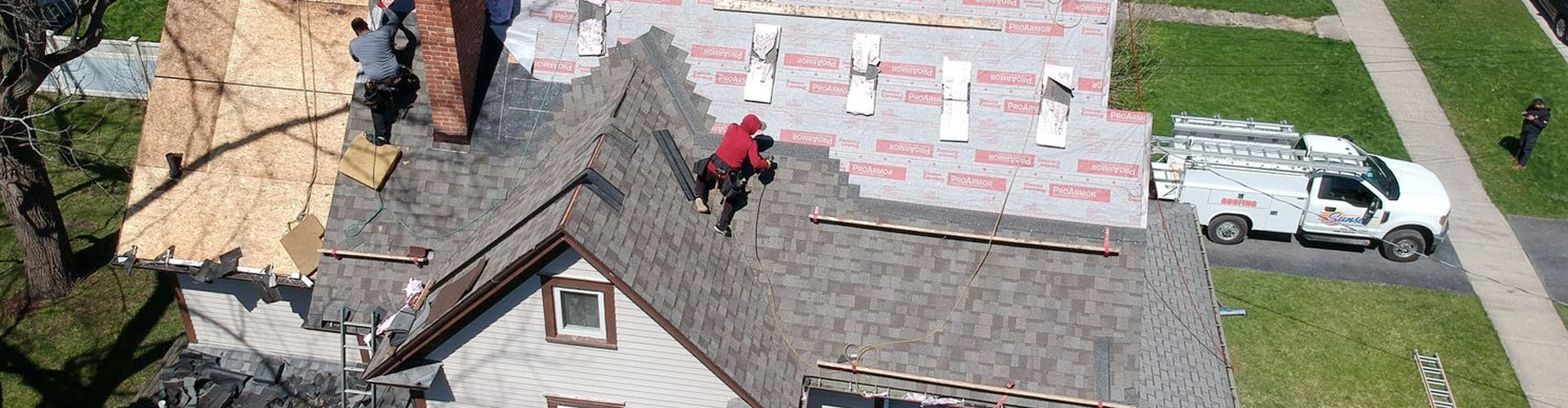
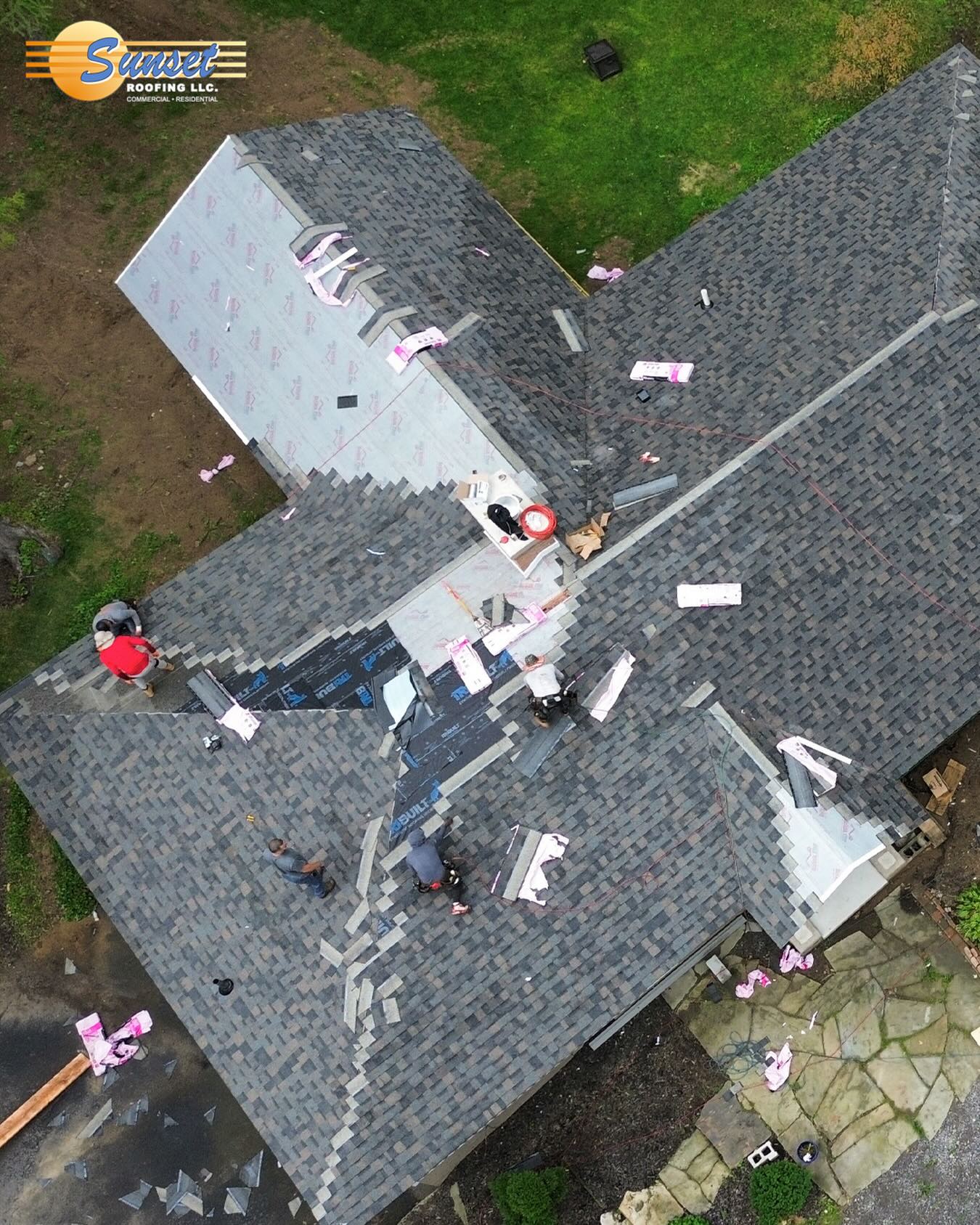
The only time the decking is fully accessible is when the old roofing has been torn off and the deck is exposed. This is precisely why a tear-off is so important, and why a quality re-roof always includes a careful inspection of the decking once it is visible.
During that inspection, a reputable contractor checks the deck for soft spots, rot, delamination, water staining, and any areas that cannot hold a fastener properly. Wherever the decking is compromised, those sections are replaced with new sheathing before the underlayment and shingles go on. This is not an upsell; it is a structural necessity. New shingles installed over rotted decking will not seal or hold properly, and the roof’s warranty and performance both depend on a sound substrate beneath it.
This is also why a thorough contractor cannot always quote the exact decking cost before the tear-off, since the full extent is genuinely not visible until the old roof is removed. The honest approach, which we follow, is to inspect the decking, show the homeowner any compromised areas, and explain the cost of replacing them as the work is done, so there are no hidden surprises and no corners cut.
Why Skipping It Is a Costly Mistake
Some homeowners, focused on the lowest bid, are tempted to skip decking replacement, or they hire a contractor who quietly shingles over bad decking to keep the price down. This is a false economy that costs far more in the end.
Shingles over rotted decking do not hold their fasteners, do not lie flat, and do not seal properly, which means the new roof fails prematurely and the homeowner pays again far sooner than they should. Compromised decking also continues to deteriorate beneath the new roof, and the structural concerns, such as a deck that cannot safely bear a snow load, do not go away. A roof is only as sound as the surface beneath it, and replacing failed decking during the re-roof is the single most important thing you cannot see that determines how long the roof you can see will last.
Trust Sunset Roofing to Build on a Sound Foundation
For more than 35 years, Sunset Roofing has re-roofed homes across Rochester and Western New York, and we treat the decking with the seriousness it deserves. Every tear-off includes a careful inspection of the deck, we show homeowners exactly what we find, and we replace any compromised sheathing before installing a new roof, because a quality roof has to start with a sound surface beneath it. We do the work honestly and explain the costs as they arise, with no surprises and no shortcuts.
If a roof replacement is in your future and you want it done right, from the decking up, we are glad to help. Request a free estimate, contact our team with your questions, or call us directly at 585-538-6086. The decking is the part of your roof you will never see, and getting it right is how the part you do see lasts the way it should.
‹ Back
Recent Posts
-
-
-

Why Fall Is the Best Season for a Roof Replacement in Rochester
September 17, 2026
-
Gutter Guards Before Leaf Season: Are They Worth It in Rochester?
September 10, 2026
-
Fall Roof Maintenance Checklist for Rochester, NY Homeowners
September 3, 2026
