

Blog
Ask any experienced roofing contractor in Western New York to name the most consistently damaging seasonal roofing problem they deal with, and the answer will almost always be the same: ice dams. Year after year, ice dams cause thousands of dollars in damage to Rochester area homes — water-stained ceilings, soaked insulation, rotted roof decking, mold in attics, and ruined interior finishes. And unlike a catastrophic storm event that is clearly visible, ice dam damage often develops quietly over an entire winter before revealing itself dramatically in the spring.
The frustrating reality is that ice dams are largely preventable — but prevention requires understanding the actual cause, which is not what most homeowners assume it to be.
What Is an Ice Dam?
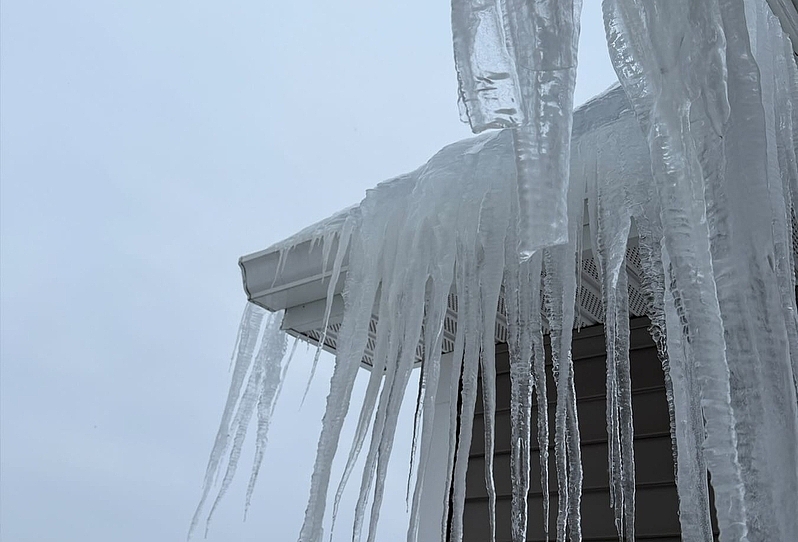
An ice dam is a ridge of ice that forms at the edge of a roof — typically along the eaves — during cold weather. As the ice ridge grows, it traps meltwater behind it on the upper portions of the roof. That trapped water has nowhere to go except backwards, under the shingles, through the underlayment, and eventually into the structure of the home.
Ice dams can form on virtually any sloped roof in a cold climate, but they are especially problematic in Rochester because of the region's combination of heavy snowfall, frequent temperature fluctuations around the freezing point, and the prevalence of older housing stock with inadequate insulation and ventilation.
What Actually Causes Ice Dams: The Real Answer
This is the most important thing to understand about ice dams, and it is the reason why solutions that address only the symptom — cables, rakes, salt — do not actually solve the problem.
Ice dams are caused by heat escaping from the living space of the home into the attic, warming the underside of the roof deck. When the roof deck above the living space is warm, snow on that portion of the roof melts. That meltwater runs down the slope toward the eaves. At the eaves — which project beyond the exterior wall of the house and are not warmed from below — the water encounters a cold surface and refreezes. This cycle repeats after each snowfall and whenever temperatures are near the freezing point, building up ice progressively at the eave.
The root cause is not the snow, and it is not simply the cold. It is the temperature differential between the warm upper roof (over the living space) and the cold lower roof (at the eave). That temperature differential is caused by inadequate insulation and/or inadequate ventilation in the attic space.
Risk Factors for Ice Dams in Rochester Homes
Certain characteristics make Rochester homes more vulnerable to ice dam formation:
- Insufficient attic insulation: Homes built before modern energy codes were established often have far less attic insulation than current standards require. Code minimums for attic insulation in New York State have increased significantly over the past few decades, and homes built in the 1960s, 1970s, and 1980s frequently fall well short of current requirements.
- Inadequate attic ventilation: Proper attic ventilation works in combination with insulation to keep the roof deck uniformly cold in winter. Blocked soffit vents, insufficient ridge ventilation, and poorly designed attic ventilation systems all contribute to heat buildup in the attic.
- Air leaks from the living space: Even with adequate insulation on the attic floor, air leaks around plumbing penetrations, electrical boxes, attic hatches, and ductwork allow warm air to bypass the insulation and enter the attic directly. These air bypasses are often more significant contributors to ice dam conditions than insulation thickness alone.
- Complex roof geometry: Roofs with valleys, dormers, and multiple intersecting slopes create areas where snow accumulates more deeply and water is more likely to pool as it melts, increasing ice dam risk in those areas.
- Older roofing without ice and water shield: Homes with older roofing systems may lack the self-adhering ice and water shield membrane at the eaves that modern installation standards require. This membrane provides a critical backup line of defense when ice dam water backs up under the shingles.
The Real Damage Ice Dams Cause
Ice dams do not damage roofs by simply sitting there. The damage happens when the water trapped behind the ice dam backs up under the shingles. Water is patient and persistent — it will find any gap in the roofing system and exploit it. Once water has moved past the shingles and the underlayment, it can:
- Saturate and compress attic insulation, permanently reducing its R-value
- Promote mold and mildew growth in the attic, which can spread to other areas of the home
- Rot the roof decking and rafters, creating structural compromise
- Seep through the ceiling and damage drywall, plaster, and finishes below
- Cause paint to peel and warp on interior walls near the exterior
- Damage electrical systems if water reaches wiring
The weight of ice dams themselves can also damage gutters — pulling them away from the fascia under the accumulated weight, or cracking them as ice forms inside. Gutters that are not properly attached can become projectiles as large ice formations break free.
What Does Not Solve Ice Dams
It is worth being direct about this, because homeowners spend significant money on solutions that do not address the underlying problem.
Electric heat cables: These cables, run in a zigzag pattern along the eave, create channels through ice dams for water to drain. They can prevent the worst damage during an active ice dam event, but they do not prevent ice dams from forming — they simply manage the consequences. They also add to your electric bill every winter and require regular maintenance and replacement.
Roof rakes: Removing snow from the lower portion of the roof after each storm can reduce ice dam formation by removing the source of meltwater. This is a reasonable short-term practice, especially in severe winters, but it is labor-intensive, carries injury risk, and can damage shingles if done aggressively. It does not address the underlying cause.
Salt and ice melt products: Rock salt or calcium chloride placed in nylon stockings and laid across the ice dam can create a drainage channel, but these products are corrosive to roofing materials, gutters, and vegetation below, and again — they treat the symptom, not the cause.
What Actually Prevents Ice Dams
Because ice dams are fundamentally a building science problem — a heat flow problem — the permanent solution requires addressing heat flow. There are two approaches that work:
1. Properly Insulate and Air-Seal the Attic
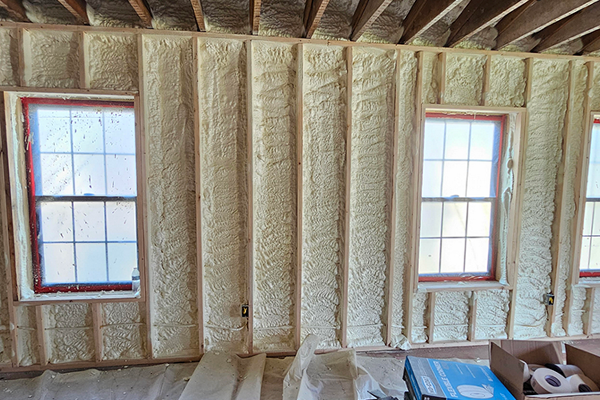
The goal is to keep the attic cold in winter by preventing heat from the living space from entering it. This requires both adequate insulation on the attic floor and thorough air-sealing of every penetration and gap through which warm air can bypass the insulation. Closed-cell spray foam insulation is particularly effective for this purpose because it insulates and air-seals in a single application, eliminating the bypasses that make traditional insulation less effective.
2. Create a Uniformly Cold Roof Deck (Encapsulated Attic)
An alternative approach is to bring the attic inside the thermal envelope of the home — to insulate the underside of the roof deck rather than the attic floor. When the roof deck itself is insulated with spray foam and the attic is conditioned space, there is no longer a warm upper roof and cold lower roof — the entire roof deck is at approximately the same temperature, and the conditions for ice dam formation are eliminated.
This "hot roof" or "encapsulated attic" approach is increasingly recommended for Rochester homes that have struggled chronically with ice dams, particularly when combined with a new roof installation. When Sunset Roofing replaces a roof, we can coordinate the attic insulation assessment and improvement as part of the overall project to address both the roof surface and the underlying cause simultaneously.
3. Install Proper Ice and Water Shield During Roof Replacement
When a roof is replaced, the installation of a quality ice and water shield membrane at the eaves is an essential protective layer. This self-adhering, rubberized membrane creates a waterproof barrier that prevents ice dam water from entering the structure even if it backs up beneath the shingles. Current best practices for Rochester's climate call for ice and water shield extending at least 24 inches inside the interior wall line from the eave, and in some cases further.
At Sunset Roofing, our residential roof installations include appropriate ice and water shield coverage as standard. We do not cut corners on this component, because we know what happens to Rochester roofs when it is inadequate.
If Your Home Already Has Ice Dam Damage
If you have noticed water staining on ceilings, peeling paint near exterior walls, or wet spots in your attic after winter, ice dam damage may already have occurred. The first step is a professional assessment to determine the extent of the damage — both to the roof system and to the interior structure.
Sunset Roofing's team can assess your roof for ice dam damage and develop a plan to address it. Depending on the extent of the damage and the age of your roof, the appropriate response might range from targeted repairs and insulation improvements to a full roof replacement with upgraded ice protection. Our repairs and emergency services team is equipped to handle both the immediate damage and the longer-term improvements that prevent recurrence.
Talk to Rochester's Roof Ice Dam Experts
Sunset Roofing has been protecting Rochester homes from ice dam damage for over 35 years. We understand this problem from every angle — roofing, insulation, and the building science that connects them. Whether you need a new roof with proper ice protection, an attic insulation upgrade, or an assessment of existing damage, our team is ready to help.
Request your free estimate today, or call our Rochester team directly at 585-538-6086. You can also learn more about our roof maintenance services to ensure your roof is in the best possible condition heading into every winter.
‹ Back
Recent Posts
-
-
-
-
Why Fall Is the Best Season for a Roof Replacement in Rochester
September 17, 2026
-
Gutter Guards Before Leaf Season: Are They Worth It in Rochester?
September 10, 2026
