

Blog
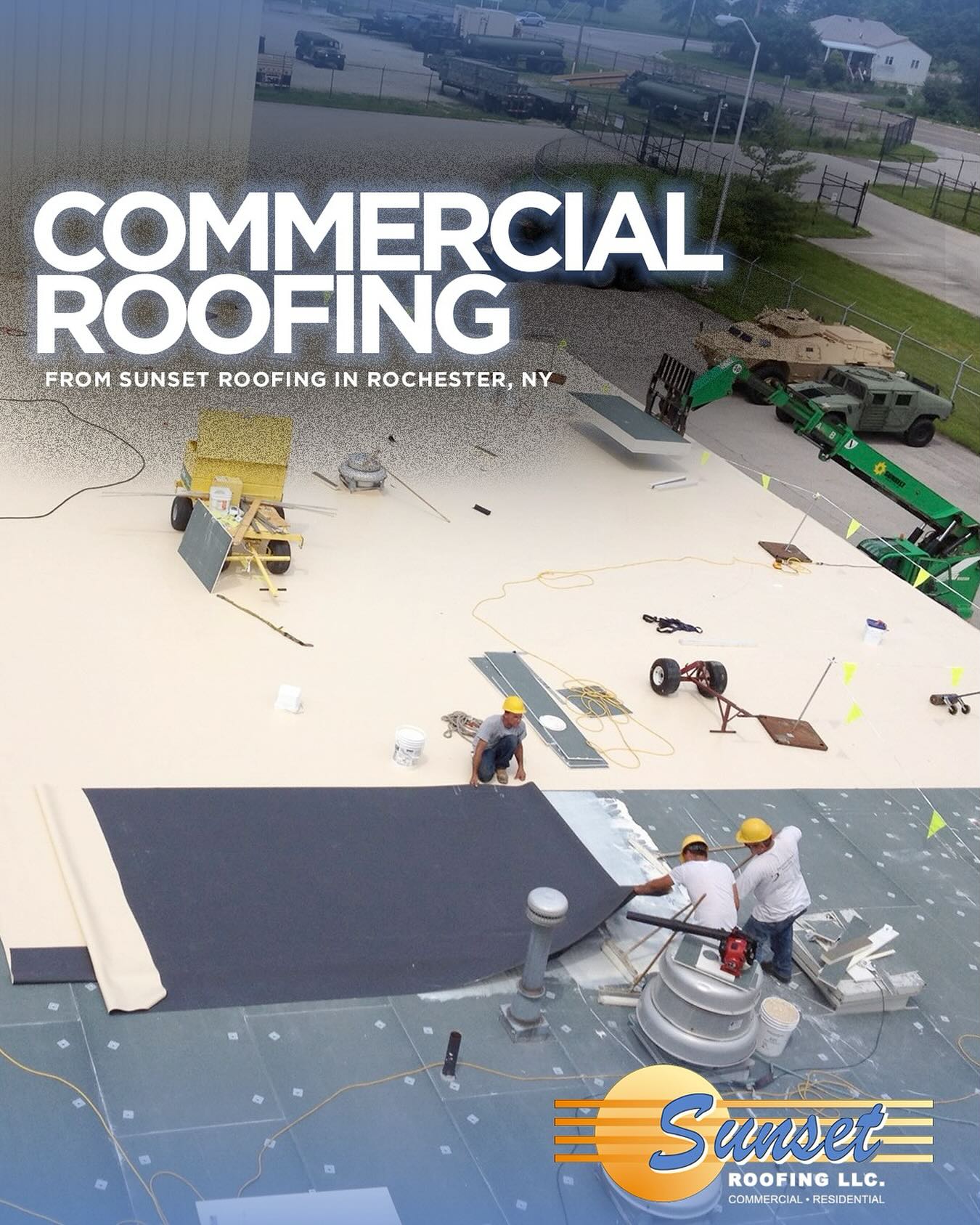
For most business owners in Rochester, the roof is one of the most significant building assets they are responsible for — and one of the most neglected. Unlike residential roofing, where a single family is affected by a failure, commercial roof problems can disrupt operations, damage inventory, create liability concerns, and send signals to customers and clients that a business is struggling to maintain its facilities. The stakes are higher, and so is the complexity of the decisions involved.
This guide is written for Rochester-area business owners, property managers, and facilities directors who want to make informed decisions about their commercial roofing systems — from understanding the different types of commercial roofing available to knowing when to repair versus replace, and how to choose a contractor who will deliver lasting results.
How Commercial Roofing Differs from Residential
Commercial and residential roofing share certain fundamentals, but they differ substantially in materials, design, installation requirements, and maintenance considerations. Understanding these differences matters when you are evaluating contractors and proposals.
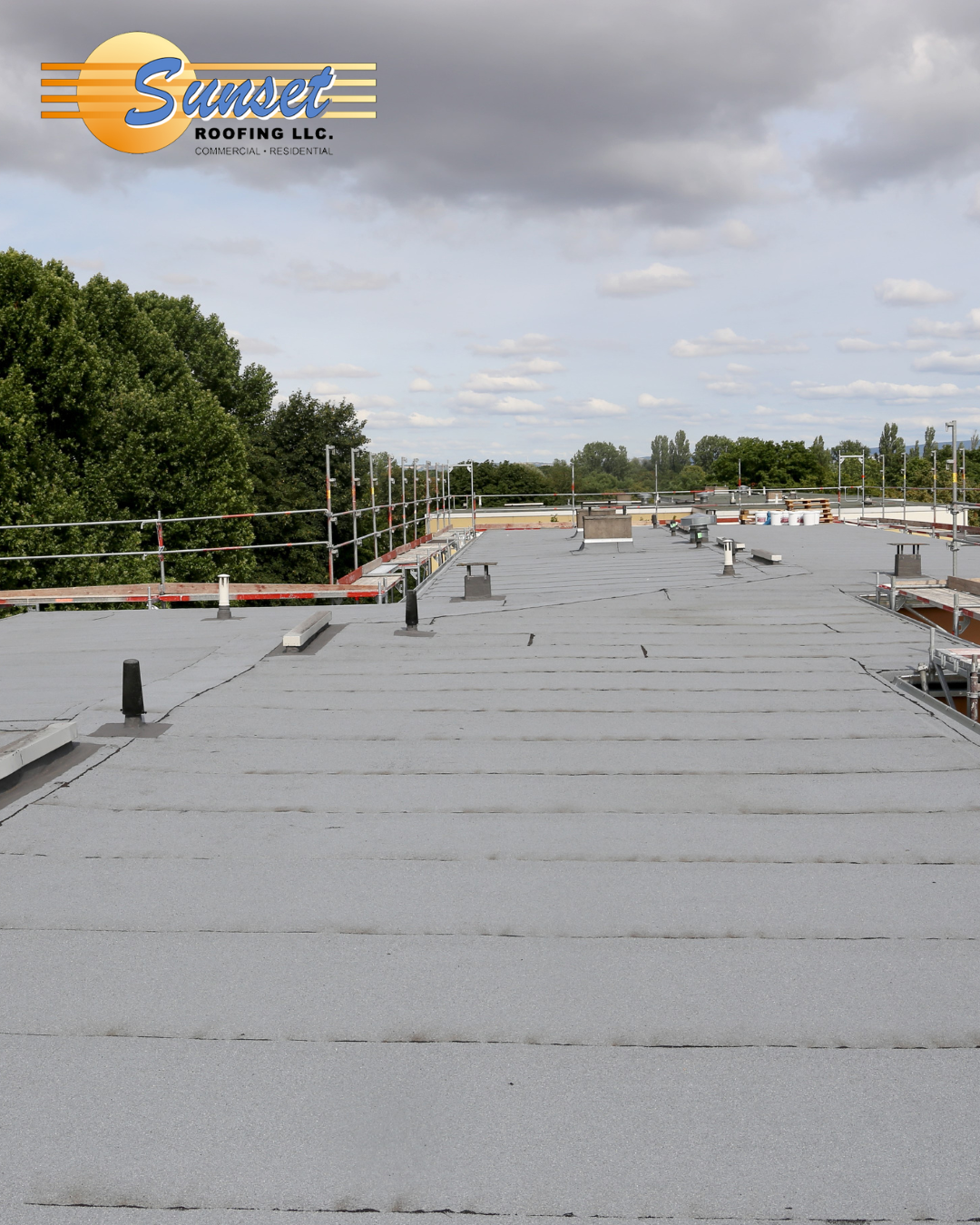
The most obvious difference is roof geometry. Most commercial buildings feature low-slope or flat roofs — technically referred to as low-slope roofing, as even "flat" commercial roofs have a slight pitch to facilitate drainage. This geometry requires entirely different waterproofing systems than the sloped roofs of most residential buildings, because water does not shed off a flat surface by gravity alone. Instead, it must be managed through carefully designed drainage systems, interior drains, and scuppers.
Commercial roofs are also typically much larger in square footage than residential roofs, which increases the consequences of any failure and the complexity of installation and inspection. HVAC equipment, exhaust stacks, skylights, and other penetrations are far more common on commercial roofs, and each penetration is a potential point of water entry that must be properly sealed and maintained.
Common Commercial Roofing Systems in Rochester
At Sunset Roofing, we work with the full range of commercial roofing systems used in Western New York. Each has distinct characteristics suited to different building types, budgets, and performance priorities.
TPO (Thermoplastic Polyolefin)
TPO is one of the most widely installed commercial roofing membranes in the United States today and is increasingly popular in the Rochester market. It is a single-ply membrane that is heat-welded at seams, creating a monolithic waterproof barrier that is both flexible and durable. TPO is highly reflective, which contributes to energy efficiency by reducing cooling loads in summer. It is also competitively priced and performs well in cold climates when properly installed.
EPDM (Ethylene Propylene Diene Monomer)
EPDM is a rubber membrane that has been used successfully on commercial roofs for decades. It is particularly well-regarded for its flexibility in cold temperatures — it remains pliable even in Rochester winters, unlike some materials that become brittle in extreme cold. EPDM is highly resistant to UV radiation and weathering. Black EPDM absorbs heat, which can be an advantage in winter but a disadvantage in summer; white-coated versions are available for improved reflectivity.
PVC (Polyvinyl Chloride)
PVC membranes are known for exceptional chemical resistance, making them a preferred choice for restaurants and food processing facilities where grease and oils may contact the roof. Like TPO, PVC membranes are heat-welded at seams. PVC is highly durable and fire-resistant but is typically more expensive than TPO and EPDM.
Modified Bitumen
Modified bitumen is an asphalt-based system reinforced with polyester or fiberglass mats and modified with polymers for improved flexibility and durability. It has a long track record in commercial roofing and is particularly suited to Rochester's cold climate, where the polymer modification prevents the brittleness that can affect traditional built-up roofing. Modified bitumen is typically applied in multiple layers, providing excellent redundancy against water infiltration.
Metal Roofing for Commercial Buildings
Standing seam metal roofing is an excellent choice for commercial buildings with adequate slope. It is exceptionally durable, requires minimal maintenance, and performs extremely well in snow and wind conditions. Many commercial property owners are choosing metal for the combination of longevity — 40 to 50 years or more — and low lifecycle cost. Metal is particularly well-suited to Rochester's heavy snow environment because its smooth surface sheds accumulation efficiently.
The Importance of Proper Drainage on Commercial Roofs
No aspect of commercial roofing is more important — or more frequently neglected — than drainage. A commercial flat roof that retains standing water is experiencing what is called "ponding," and ponding water accelerates the deterioration of virtually every roofing membrane material. It adds weight that structural systems were not designed for, creates conditions favorable to biological growth, and stresses seams and flashings through repeated wet-dry cycling.
Properly designed drainage includes adequate interior drains or scuppers to handle Rochester's heavy rainfall rates, slope designed into the roof system to direct water toward drains, overflow provisions that prevent water from accumulating beyond a safe depth, and regular maintenance to keep drains clear of debris.
If your commercial roof currently experiences ponding water, this is a priority issue that should be addressed with your roofing contractor as soon as possible. In some cases, tapered insulation can be added beneath a new membrane to correct slope problems; in others, drain placement or sizing may need to be modified.
Commercial Roof Maintenance: What Every Business Owner Should Know
Commercial roofing warranties — which can extend for 10, 15, or 20 years on materials — typically require documented regular maintenance as a condition of coverage. If a warranty claim is submitted but the building owner cannot demonstrate that the roof was regularly inspected and maintained, the manufacturer may deny the claim. This makes professional maintenance not just good practice but a financial necessity for most commercial property owners.
A professional commercial roof maintenance program should include:
- Semi-annual inspections in spring and fall
- Inspection and cleaning of all drains, scuppers, and gutters
- Assessment of membrane condition, including seam integrity and surface wear
- Inspection of all penetration flashings around HVAC equipment, pipes, and skylights
- Written reports with photographs documenting findings and any completed repairs
- Prompt completion of minor repairs identified during inspections, before they escalate
The cost of a professional maintenance program is modest compared to the cost of a premature roof replacement or an unplanned emergency repair. Business owners who invest in routine maintenance consistently see longer roof lifespans and fewer operational disruptions.
When to Repair vs. Replace a Commercial Roof
This is one of the most consequential decisions a commercial building owner or manager will face, and there is no universal formula for making it. The right answer depends on the age and condition of the existing roof, the type of roofing system in place, the extent and pattern of any existing problems, and your budget and long-term plans for the building.
As a general framework, consider these factors that typically favor repair:
- The existing roof is less than halfway through its rated service life
- Problems are isolated to specific areas rather than distributed across the entire roof
- The underlying deck is structurally sound with no widespread rot or delamination
- The roofing system is still under warranty
Factors that typically favor replacement include:
- The roof is at or near the end of its rated service life
- Problems are recurring and widespread rather than isolated
- The cost of repairs is approaching 25 to 30 percent of replacement cost
- Interior water damage has been significant or recurring
- Energy costs are unusually high and the roofing system is a contributing factor
The most reliable way to make this decision is with a professional assessment from an experienced commercial roofing contractor. At Sunset Roofing, we provide honest assessments that present the real options and their costs transparently, without pressure toward the more expensive outcome.
How to Choose a Commercial Roofing Contractor in Rochester
The quality of a commercial roofing installation depends enormously on the contractor selected. Here are the critical criteria to evaluate:
Local experience and reputation. A contractor with deep roots in the Rochester market has installed roofs that you can inspect and has a reputation that is verifiable through local references. National roofing franchises and out-of-area contractors may lack the specific experience with Western New York's climate conditions and local building codes.
Proper licensing and insurance. Verify that any contractor you consider carries appropriate general liability and workers' compensation insurance. Request certificates of insurance, not just verbal assurances.
Manufacturer certifications. Roofing material manufacturers offer certified contractor programs that require demonstrated installation expertise and ongoing training. Certifications from GAF and similar manufacturers indicate a contractor who is held to documented standards.
Written proposals and detailed contracts. Every commercial roofing project should be governed by a detailed written contract that specifies materials by manufacturer and product name, installation methods, scope of work, project timeline, payment schedule, and warranty terms. Vague proposals are a red flag.
References from comparable projects. Ask for references from commercial projects of similar scope and building type. A contractor who primarily does residential work may not have the commercial-specific experience your project requires.
Protecting Your Business with the Right Roofing Partner
Sunset Roofing has provided commercial roofing services to Rochester-area businesses for over 35 years. We understand the unique pressures that business owners face — the need to minimize operational disruption, to work within defined budgets, and to make investments that will perform reliably for years without requiring constant attention. Our team is equipped to handle commercial projects from small retail spaces to large industrial facilities, and we bring the same commitment to quality and transparent communication to every project.
If your commercial roof is due for inspection, repair, or replacement, we are ready to help. Request a free commercial roofing estimate today, or call our team at 585-538-6086 to discuss your building's needs. You can also visit our commercial roofing services page to learn more about our capabilities and approach.
‹ Back
Recent Posts
-
Gutter Guards Before Leaf Season: Are They Worth It in Rochester?
September 10, 2026
-
Fall Roof Maintenance Checklist for Rochester, NY Homeowners
September 3, 2026
-
-
Summer Maintenance for Commercial Flat Roofs in Rochester, NY
August 21, 2026
-
Cool Roofs and Energy Efficiency for Rochester Homes
August 15, 2026
