
Blog
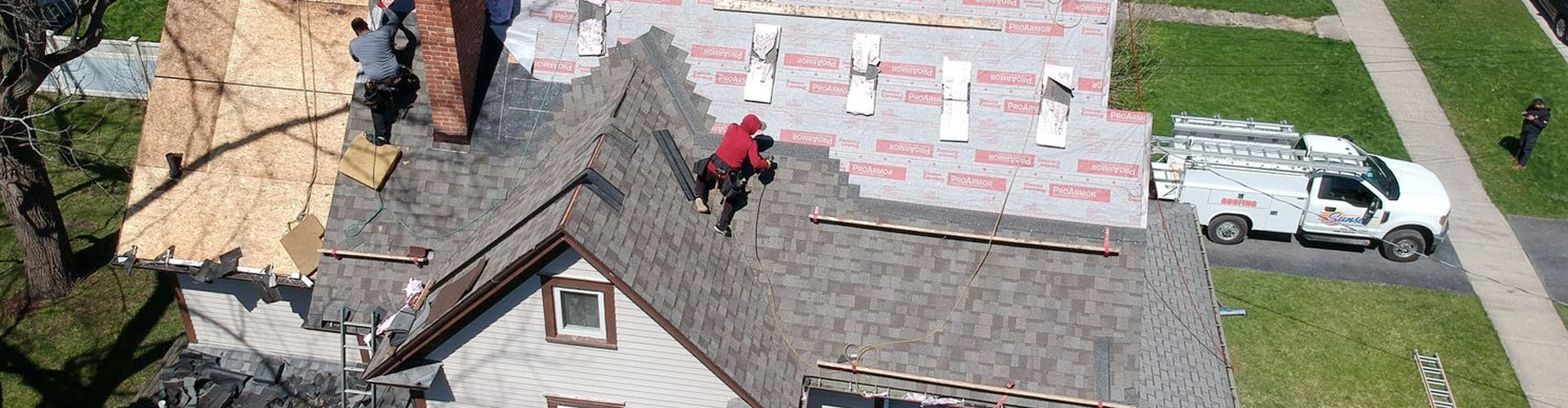
A new roof is one of the larger discretionary expenses most homeowners ever take on. For a typical Rochester home, the project sits in a similar price range as a kitchen remodel or a major HVAC upgrade — significant enough that very few homeowners write a check and move on, and serious enough that the financing decision deserves the same care as the roofing decision itself.
The good news is that financing a new roof has gotten substantially easier and more flexible over the last decade. Between manufacturer-backed financing programs, traditional home equity products, and dedicated home improvement lenders, most Rochester homeowners have several reasonable options to choose from. The bad news is that the wrong financing structure can quietly cost thousands of dollars over the life of the loan, even when the underlying roof project is identical.
This article walks through the practical considerations Rochester homeowners should weigh when planning a new roof, the financing options most commonly available, and how to think about the decision in a way that protects your monthly budget without overpaying in the long run.
Why Roof Replacement Is a Special Kind of Expense
A new roof is unusual among major home expenses in two ways. First, it is rarely truly optional — once a roof reaches the end of its useful life, the question is when to replace, not whether. Second, the cost of delay is often higher than the cost of the project itself. A failing roof produces interior damage, mold and moisture issues, energy waste, and insurance complications that compound month over month.
That dynamic shapes the financing conversation. A homeowner facing a kitchen remodel can wait six months while saving up; a homeowner with a leaking roof generally cannot. The right financing approach is the one that lets you do the work on the timeline the roof actually requires, at terms you can sustain comfortably.
What a New Roof Typically Costs in Rochester
Roofing project costs vary widely based on home size, roof complexity, the chosen shingle line, the condition of the underlying decking, and the extent of any associated work like gutter replacement or attic ventilation upgrades. For most Rochester homes, a complete asphalt shingle roof replacement using a quality architectural shingle and a full system of underlayments and accessories typically falls within a meaningful range — one large enough that financing becomes the natural conversation for many homeowners, even those who have set aside savings.
It is also worth noting that quoted prices can vary substantially across contractors for what looks like the same scope of work. Lower numbers often reflect cheaper materials, thinner underlayment specifications, omitted ice and water barrier in critical areas, or workmanship guarantees that are noticeably weaker than the alternatives. A clear, written estimate that itemizes materials, system components, and warranty coverage is the only reliable way to compare offers honestly.
Common Financing Options for a New Roof
Rochester homeowners typically have access to several financing pathways, each with its own strengths and tradeoffs.
Contractor-arranged financing. Many established roofing contractors, including Sunset Roofing, work with reputable home improvement lenders to offer financing programs directly to customers. The advantage of these programs is convenience, speed, and the ability to access promotional terms that are not always available through retail banking channels. We work with several lenders and can typically present multiple options to a homeowner so that the structure that fits the household budget is the one chosen.
Home equity line of credit (HELOC). A HELOC uses the equity in your home as collateral and typically offers lower interest rates than unsecured loans. The flexibility — draw what you need, pay what you draw — makes a HELOC well suited to projects where the final cost may shift slightly during the work. The tradeoffs are that the loan is secured by the home, the closing process is more involved, and rates are usually variable, which means monthly payments can move over time.
Home equity loan. A home equity loan is similar to a HELOC but is structured as a fixed-rate, fixed-term installment loan rather than a revolving line of credit. For homeowners who prefer predictable payments, the certainty can be valuable. The same caveat applies: the loan is secured by the home, and the closing process takes time.
Cash-out refinance. If your current mortgage rate is well above today’s market rate, a cash-out refinance can simultaneously reduce your monthly mortgage cost and fund the roof project. If your current rate is below market, this option is rarely worthwhile because the refinance itself increases the underlying mortgage cost in a way that overwhelms the project savings.
Personal loan or credit card. Unsecured loans and credit cards are the easiest financing to access but typically carry the highest interest rates. They can make sense for smaller projects or short-term gap financing, but for a full roof replacement they are usually the most expensive long-term path. We rarely recommend these as a primary structure unless the homeowner’s circumstances genuinely require it.
The Numbers That Actually Matter
When evaluating a financing offer, the headline interest rate is one factor among several. Rochester homeowners often benefit from looking at the broader picture before committing.
Total cost over the life of the loan. A lower monthly payment that runs for fifteen years can ultimately cost more than a higher monthly payment over seven years. Both numbers matter; only one is usually featured prominently in marketing materials.
Promotional period terms. Some financing offers include a no-interest or reduced-interest promotional window, often six to eighteen months. These can be excellent if you intend to pay the loan off within the window. They can be expensive if the promotional rate expires and reverts to a much higher standard rate while a balance remains.
Prepayment flexibility. Some loans allow you to pay extra without penalty, accelerating the payoff and reducing total interest. Others charge prepayment penalties or otherwise limit early payoff. If your household budget allows for occasional larger payments, prepayment flexibility is a meaningful feature.
Closing costs and fees. Some financing structures, particularly those secured by the home, include closing costs that materially affect the total cost. Compare offers on an apples-to-apples basis that includes these fees, not just the headline rate.
Sunset Roofing also makes a financing payment calculator available to help homeowners model these tradeoffs in real numbers before committing. The payment calculator lets you adjust the project amount, the term, and the rate to see how the monthly payment shifts — useful for finding the structure that actually fits the household budget.
Insurance and the Financing Conversation
For Rochester homeowners replacing a roof because of storm or hail damage, the financing picture often includes an insurance settlement. In those cases, the project is typically funded primarily by the insurance proceeds, with the homeowner responsible only for the deductible and any covered upgrades.
The financing question still arises, however — particularly when the homeowner chooses to upgrade the roofing system beyond the basic replacement covered by insurance, or when the deductible itself is a meaningful expense. In these situations, a smaller bridge financing arrangement can cover the gap without disrupting household budgets, and contractor-arranged financing programs are usually well suited to this kind of structure.
What to Watch Out For
A few financing patterns deserve a second look before signing anything.
Beware of pressure tactics that tie financing terms to a same-day signature on the project itself. A reputable contractor will give you the time to read the financing agreement, compare it against alternatives, and ask questions before committing. The roofing decision and the financing decision can be made together, but neither should be rushed because of the other.
Be cautious about deferred-interest promotions where interest accrues during the promotional window and is charged retroactively if the balance is not paid in full by the deadline. These can produce a significant unexpected cost at the end of the promotional period if the loan has not been fully paid off.
Watch for variable-rate products in a rising-rate environment. A rate that looks attractive at signing can move materially upward over a multi-year loan, and the resulting payment changes catch some homeowners by surprise.
Plan the Financing Before the Project Starts
The most common mistake we see in Rochester is homeowners locking in a project timeline before working out the financing details. That sequence creates unnecessary pressure and sometimes pushes the homeowner toward a less optimal financing structure simply because of timing.
The cleaner approach is to understand your financing options early in the process — ideally before final material selections are made. That way, when the project moves forward, the financing is already in place, the terms are understood, and the decision-making is calmer. We help every customer through this process as part of our normal workflow, and we encourage homeowners to start the conversation early.
Sunset Roofing’s Approach to Financing
Sunset Roofing has financed thousands of Rochester roofs over more than 35 years. We work with reputable home improvement lenders, present multiple options when more than one fits, and walk every customer through the numbers honestly so the structure that actually serves the household is the one chosen. We do not push customers toward financing they do not need, and we do not make the project itself contingent on financing through us.
If a new roof is on the horizon and you would like to understand the options before the project begins, we are happy to start that conversation. Visit our financing options page to learn more about the programs we work with, use the financing payment calculator to model the numbers for your own project, request a free estimate to get a real project cost to plan against, or call our team directly at 585-538-6086. A new roof should protect your home for the next 25 to 30 years. The financing structure should protect your budget for the life of the loan.
‹ Back
Recent Posts
-
-

Why Fall Is the Best Season for a Roof Replacement in Rochester
September 17, 2026
-
Gutter Guards Before Leaf Season: Are They Worth It in Rochester?
September 10, 2026
-
Fall Roof Maintenance Checklist for Rochester, NY Homeowners
September 3, 2026
-