

Blog
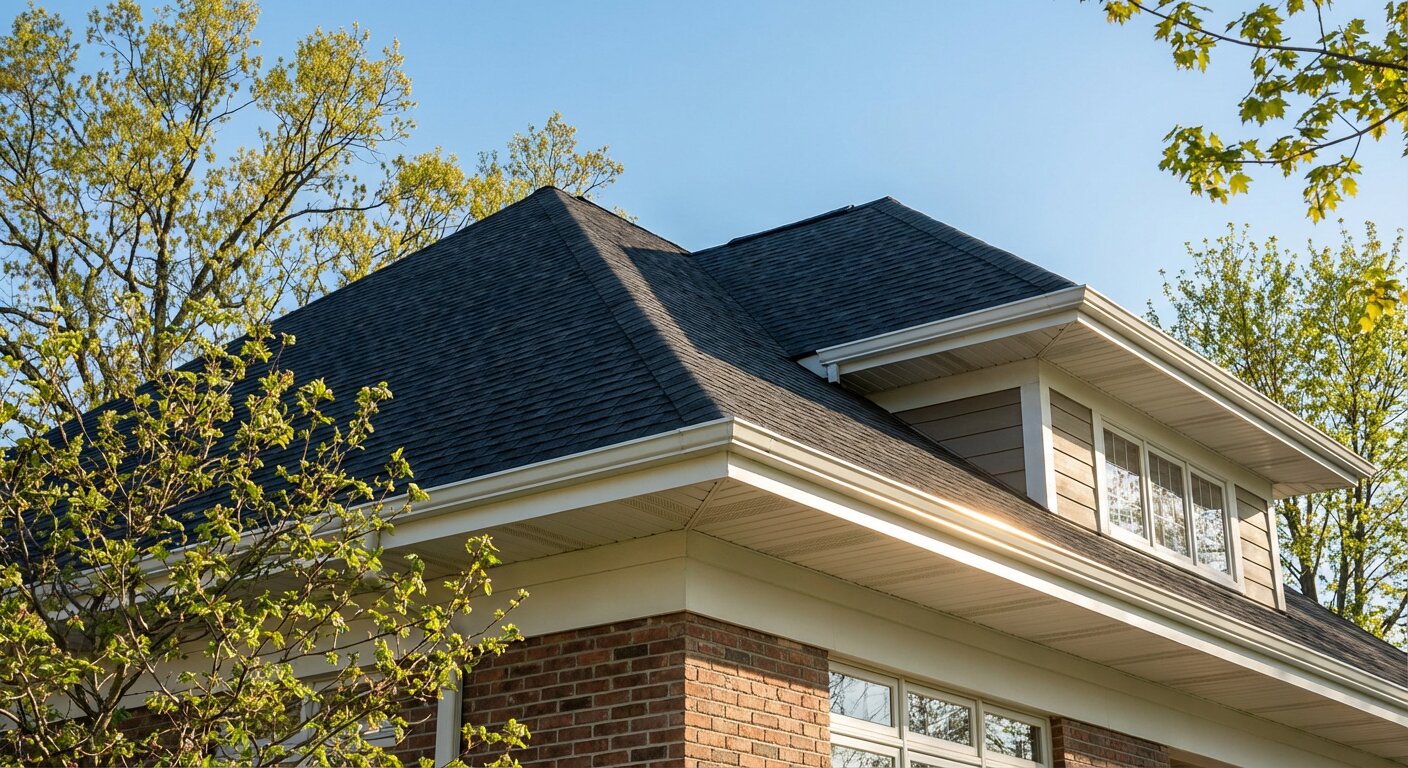
Walk into an upstairs bedroom on a hot July afternoon in Rochester and you will feel something the thermostat downstairs does not register: the upper floor is noticeably, stubbornly warmer. Much of the time, the culprit is not the air conditioning or the insulation but the attic above, and specifically how well that attic vents the heat that builds up under the roof on a sunny day. Attic ventilation is one of the least understood and most consequential aspects of a home’s comfort and its roof’s longevity.
When the subject of attic cooling comes up, homeowners often ask about powered attic fans, the units that actively pull hot air out of the attic. They sound logical: hot air in the attic, fan to remove it. But the reality is more nuanced, and in many Rochester homes, a well-designed passive ventilation system outperforms a powered fan and avoids its drawbacks entirely. Understanding the difference helps you make the right decision for your home.
This article explains how attic ventilation works, compares powered attic fans to passive ventilation, and helps you understand which approach actually serves a Rochester home best.
Why Attic Ventilation Matters Year-Round
Attic ventilation is not only a summer concern, which is one reason it is so easy to get wrong. A properly ventilated attic serves the home in every season.
In summer, ventilation lets the intense heat that builds up under the roof deck escape rather than radiating down into the living space and forcing the air conditioning to work harder. It also keeps the underside of the roof deck cooler, which slows the heat-related aging of the shingles above.
In winter, ventilation is just as important for a different reason. A properly vented attic stays cold and even in temperature, which prevents the warm spots that melt snow on the roof and lead to ice dams at the cold eaves. Ventilation also carries away the moisture that migrates up from the living space, preventing the condensation that causes mold, rot, and ruined insulation.
A balanced ventilation system, in other words, protects comfort in summer, prevents ice dams in winter, removes moisture year-round, and extends the life of the roof in every season. It is one of the highest-leverage systems in the entire home.
How Passive Ventilation Works
Passive ventilation uses no electricity and no moving parts. It works by the simple physics of hot air rising and the pressure differences that natural airflow creates.
The system has two essential halves. Intake vents, located low at the soffits or eaves, let cool outside air enter the attic. Exhaust vents, located high at or near the ridge, let the hottest air escape at the peak. As hot air rises and exits the top, it draws cooler air in through the bottom, creating a continuous natural flow that washes the underside of the roof deck with fresh air.
The critical word is balanced. The intake and exhaust must be properly proportioned and positioned. A roof with plenty of ridge exhaust but blocked or insufficient soffit intake cannot draw air through. It is like trying to drink through a straw with your finger over the other end. This imbalance is one of the most common ventilation problems we find on Rochester homes, and correcting it often solves comfort and ice-dam issues without any powered equipment at all.
If your upstairs is uncomfortably hot in summer or you battle ice dams in winter, your ventilation balance is the first thing worth checking. Request a free inspection and we will evaluate whether your attic is breathing the way it should.
How Powered Attic Fans Work, and Their Drawbacks
A powered attic fan is an electric fan, usually thermostatically controlled, that actively exhausts hot air from the attic. On the surface this seems strictly better than passive venting, but in practice powered fans carry real drawbacks that homeowners are often not told about.
The first problem is that a powered fan can pull conditioned air out of the house. If the attic does not have enough intake venting to feed the fan, it will draw air from the path of least resistance, which is often the cooled, air-conditioned air leaking up from the living space through gaps around fixtures and the attic hatch. In that scenario, the fan is actively pulling the air you paid to cool up into the attic and out, making the air conditioner work harder rather than easier.
The second problem is that powered fans consume electricity, sometimes enough to offset whatever cooling savings they were supposed to provide. The third is that they are mechanical devices that wear out, fail, and require replacement, adding another component to maintain on the roof.
There are situations where a powered fan or a solar-powered vent makes sense, particularly on a complex roof where adequate passive exhaust is genuinely difficult to achieve. But for most Rochester homes, fixing and balancing the passive system is the better, lower-maintenance solution.
What the Right Answer Usually Looks Like in Rochester
For the majority of homes in our region, the most effective and trouble-free approach is a well-balanced passive ventilation system: continuous soffit intake feeding a continuous ridge vent, sized correctly for the attic and kept clear of insulation blocking the airflow at the eaves.
The most common improvement we make is not adding equipment but correcting an existing imbalance, whether that means opening up blocked soffit intake, adding baffles to keep insulation from choking the airflow, or replacing inadequate exhaust with a properly sized ridge vent. These passive corrections solve the summer-heat and winter-ice-dam problems together, with nothing to power and nothing to fail.
The right answer always starts with an actual assessment of how your specific attic is breathing, because ventilation problems are particular to each home’s roof design, insulation, and history. Guessing, or simply bolting on a fan, often misses the real issue.
Let Sunset Roofing Balance Your Attic Ventilation
For more than 35 years, Sunset Roofing has diagnosed and corrected attic ventilation across Rochester and Western New York. We know how our summers and winters both stress an attic, and we design balanced ventilation that keeps your upstairs more comfortable in July, prevents ice dams in January, and extends the life of your roof every month in between.
If your upstairs runs hot in summer, your energy bills are climbing, or you have battled ice dams in winter, your ventilation is worth a professional look before you spend money on fans or extra cooling. Request a free inspection and estimate, contact our team with your questions, or call us directly at 585-538-6086. The right ventilation is one of the smartest, most cost-effective upgrades a Rochester homeowner can make, and often it costs less than you would expect.
‹ Back
Recent Posts
-

Why Fall Is the Best Season for a Roof Replacement in Rochester
September 17, 2026
-
Gutter Guards Before Leaf Season: Are They Worth It in Rochester?
September 10, 2026
-
Fall Roof Maintenance Checklist for Rochester, NY Homeowners
September 3, 2026
-
-
Summer Maintenance for Commercial Flat Roofs in Rochester, NY
August 21, 2026
