

Blog
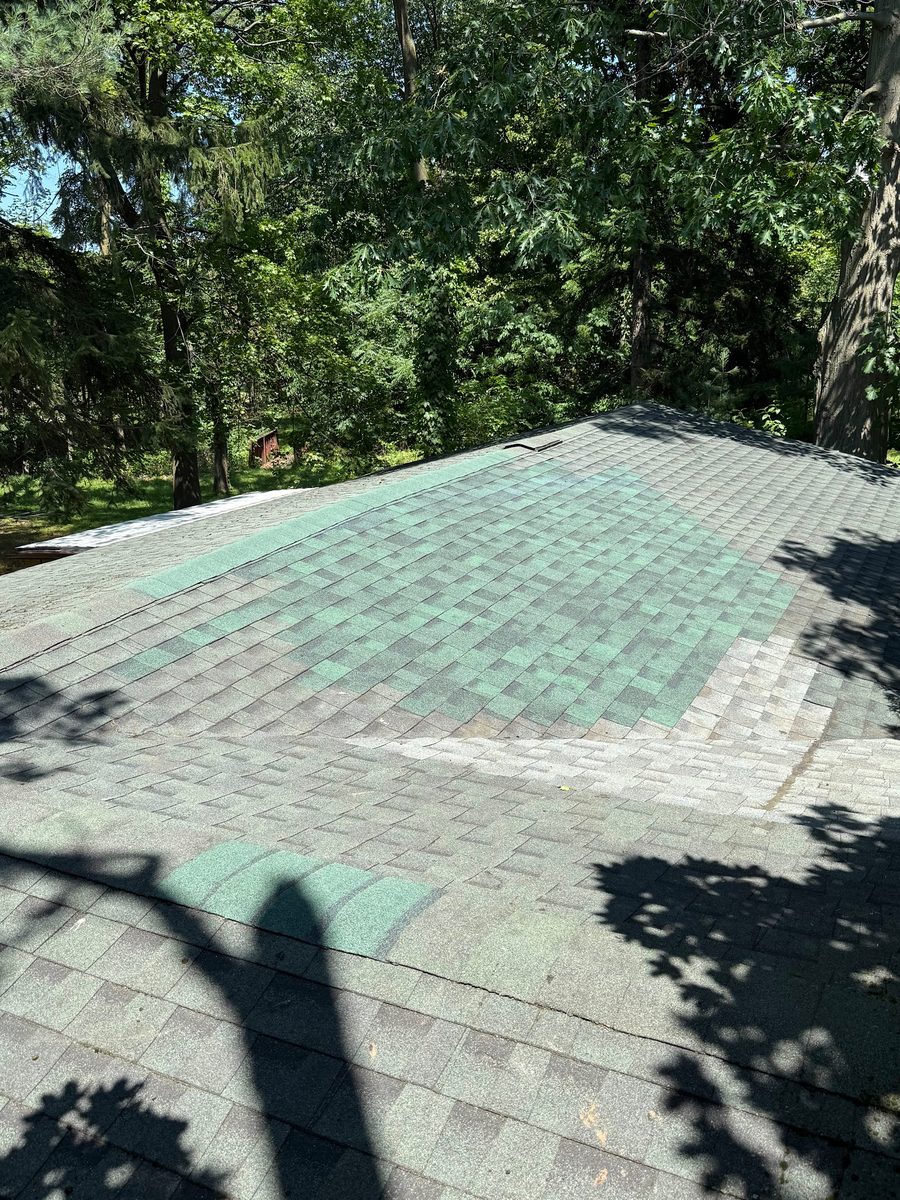
Western New York is beautiful in large part because of its trees, and every homeowner who has lived here through a storm season knows the other side of that beauty. Mature oaks and maples that have shaded a house for decades can come down in a single night, and when one lands on a roof, the damage is rarely confined to the spot where it hit.
A tree strike is one of the few roofing emergencies that is both immediately obvious and easy to underestimate. The hole in the roof is visible from the yard, but the damage that matters most, to the decking, the flashing, the drip edge, and the structure beneath, often extends well past the point of impact. Knowing what to do in the first few hours, and what a proper repair actually involves, is what keeps a bad night from turning into a much larger and more expensive problem.
This article walks through what to do when a tree comes down on your roof, why speed matters so much in our climate, and what a thorough tree-damage repair should include.
First, Treat It as a Safety Situation
Before anyone thinks about the roof itself, a tree strike needs to be treated as a structural and electrical hazard rather than a roofing problem.
Move everyone out of the rooms beneath the impact and stay out of them. A tree that has broken through the decking has already compromised the structure above those rooms, and ceilings that are holding water can come down without much warning. If any part of the house is visibly sagging, shifting, or making noise, leave the building and call emergency services.
Look for power lines before anything else. Falling trees frequently take service lines down with them, and a line lying in the yard or draped across the roof should be treated as live. Call the utility, not a contractor, and keep well clear until they have cleared it.
Finally, stay off the roof and leave the tree where it is. It is a natural instinct to want to pull the limb out and get a tarp over the hole, but a tree resting on a damaged deck is often the only thing distributing that weight. Removing it without knowing what is underneath can turn a contained opening into a collapse, and the roof surface around an impact is far weaker than it looks.
Document Everything Before Anything Moves
Tree and storm damage is typically a covered peril, and the strength of your claim depends heavily on what you record in the first hours.
Photograph the damage from the ground at several angles, including wide shots that show the tree in relation to the house and closer shots of the impact area. Photograph the interior as well, including any ceiling staining, water intrusion, or damaged belongings. If a second tree or limb came down elsewhere on the property, document that too, because damage in more than one area is common and is easy to overlook once cleanup begins.
Contact your insurer promptly and keep every receipt. Most policies obligate the homeowner to take reasonable steps to prevent further damage, which means emergency tarping and temporary repairs are usually reimbursable, but only if you have documented them. Hold on to damaged materials until the adjuster has seen them.
Get the Opening Covered Quickly
Once safety and documentation are handled, the priority becomes keeping water out, because in our climate the second disaster usually arrives before the first one is repaired.
Rain in Western New York rarely comes alone, and an open roof takes on water fast. Water that gets into the assembly soaks the insulation, saturates the decking, runs along framing into walls and ceilings well away from the opening, and creates the conditions for mold and rot within days. A great deal of the total cost of a tree strike is not the impact itself but the water that follows it, and that portion is largely preventable with a fast, properly installed temporary cover.
This is emergency work, and responsiveness matters more than almost anything else at this stage. A roofer who can get out quickly, dry the structure in properly, and then plan the permanent repair will save you far more than the difference in any estimate.
If a tree has come down on your home, do not wait to have it looked at. Contact our team and we will get out to assess the damage and protect the opening.
Why Tree Damage Is Rarely Just One Spot
The most common mistake homeowners make after a tree strike is assuming the repair is limited to the visible hole. It seldom is.
The force of an impact travels through the roof deck well beyond the point of contact. Fasteners loosen, shingles crack and lose their seal, and sheathing can be compromised several feet away from where the tree actually landed, none of which is obvious from the driveway. A limb that scrapes down the slope on its way off the roof will often damage the drip edge, the gutters, the fascia, and the flashing along the way.
Adjacent structures take the same storm. Garages, sheds, and porch roofs are frequently hit in the same event, and because they are secondary buildings they tend to be inspected last, if at all. Damage from a separate limb or a second tree elsewhere on the property is also easy to miss once attention is focused on the obvious opening.
For that reason, a proper assessment after a tree strike covers the entire roof and every affected structure on the property, not only the point of impact. Finding all of it at once is what allows the repair, and the insurance claim, to be handled in a single pass rather than in a series of expensive surprises.
Repair or Replace After a Tree Strike?
Whether tree damage calls for a repair or a full replacement depends on the extent of the damage, the age and condition of the existing roof, and how well new shingles can be blended into the old.
When the impact is contained and the surrounding roof is relatively young and in sound condition, a repair is usually the right answer. The damaged decking is replaced, the assembly is rebuilt properly, and new shingles are matched as closely as the existing ones allow. Older shingles will always have weathered somewhat, so a repair on an aged roof is rarely invisible, but a careful installer can make it blend well.
When the roof is already near the end of its service life, when the shingles have grown brittle enough that working around the repair damages them further, or when the impact is spread across a wide area, a replacement often makes better sense. In many of those cases the insurance claim reflects it, and the homeowner ends up with a full new roof rather than a patch on a failing one.
The honest approach is simply to show the homeowner what is there and explain both options, including which one the insurance is likely to support, and let them decide with the full picture in front of them.
What a Proper Tree-Damage Repair Includes
Tree damage repair done correctly is a sequence, and skipping steps in it is how homeowners end up with recurring leaks in a roof that was supposedly already fixed.
It starts with removing the tree safely and in a controlled way, so that nothing shifts and no further damage is done coming off the roof. With the impact area exposed, the decking is inspected and every compromised section is replaced, because new shingles fastened to cracked or rotted sheathing will not hold and will not seal. From there the assembly is rebuilt in order: underlayment, ice and water protection where the roof calls for it, and shingles matched as closely as possible to the existing field.
The details around the impact matter just as much. Damaged flashing, drip edge, drip cap, and gutters all need to be repaired or replaced rather than reused, since these are the components that manage water at the most vulnerable edges of the roof. It is also worth checking the attic from below once the work is done, to confirm no water made it into the insulation or framing during the time the roof was open.
The last step is cleanup, and it is not a courtesy. A tree strike scatters shingle fragments, splintered decking, branches, and above all nails across the roof and the yard beneath it, and a property with children, pets, or bare feet needs that debris gone before the crew leaves.
What This Looks Like in Practice
A recent job in our area brought most of these pieces together at once. A tree had come through the roof of a homeowner’s garage, and a second tree had come down separately on the house itself, damaging the drip cap. Both structures needed work, in one day, with the homeowner’s husband unwell and resting inside.
Here is how the homeowner described it afterward:
“Orest and Sasha of Sunset Roofing put in a full day at our place and fixed EVERYTHING! They not only removed the giant tree that was stuck in the roof of our garage, but also fixed the enormous hole it left behind AND the damage to our drip cap from a SEPARATE tree that fell on our house. They cleaned both roofs and the area around it all before leaving, and did it all without waking my sick husband. Honestly, I couldn’t have asked for better work or more dedicated workers!”
That job is a fair illustration of the points above: damage in two separate places from two separate trees, a structural opening that had to be rebuilt rather than patched, edge details like the drip cap addressed properly, and both roofs and the surrounding area cleaned before the crew left. The work was done thoroughly and it was done considerately, and on a day like that the second part matters to a homeowner nearly as much as the first.
Storm and Tree Damage Repair from Sunset Roofing
For more than 35 years, Sunset Roofing has handled storm and tree damage for homeowners across Rochester and Western New York, from emergency tarping through full structural repair and insurance documentation. As an Owens Corning Platinum Preferred Contractor, we rebuild the roof assembly properly rather than covering the damage, and we treat the property, and the people living on it, with the care that a bad week calls for.
If a tree has come down on your home, garage, or business, we can help. Request a free estimate, contact our team, or call us directly at 585-538-6086. Tree damage is not something to leave open to the next rain, and getting it assessed quickly is the difference between a repair and a much bigger project.
‹ Back
Recent Posts
-
Why Fall Is the Best Season for a Roof Replacement in Rochester
September 17, 2026
-
Gutter Guards Before Leaf Season: Are They Worth It in Rochester?
September 10, 2026
-
Fall Roof Maintenance Checklist for Rochester, NY Homeowners
September 3, 2026
-
-
Summer Maintenance for Commercial Flat Roofs in Rochester, NY
August 21, 2026
